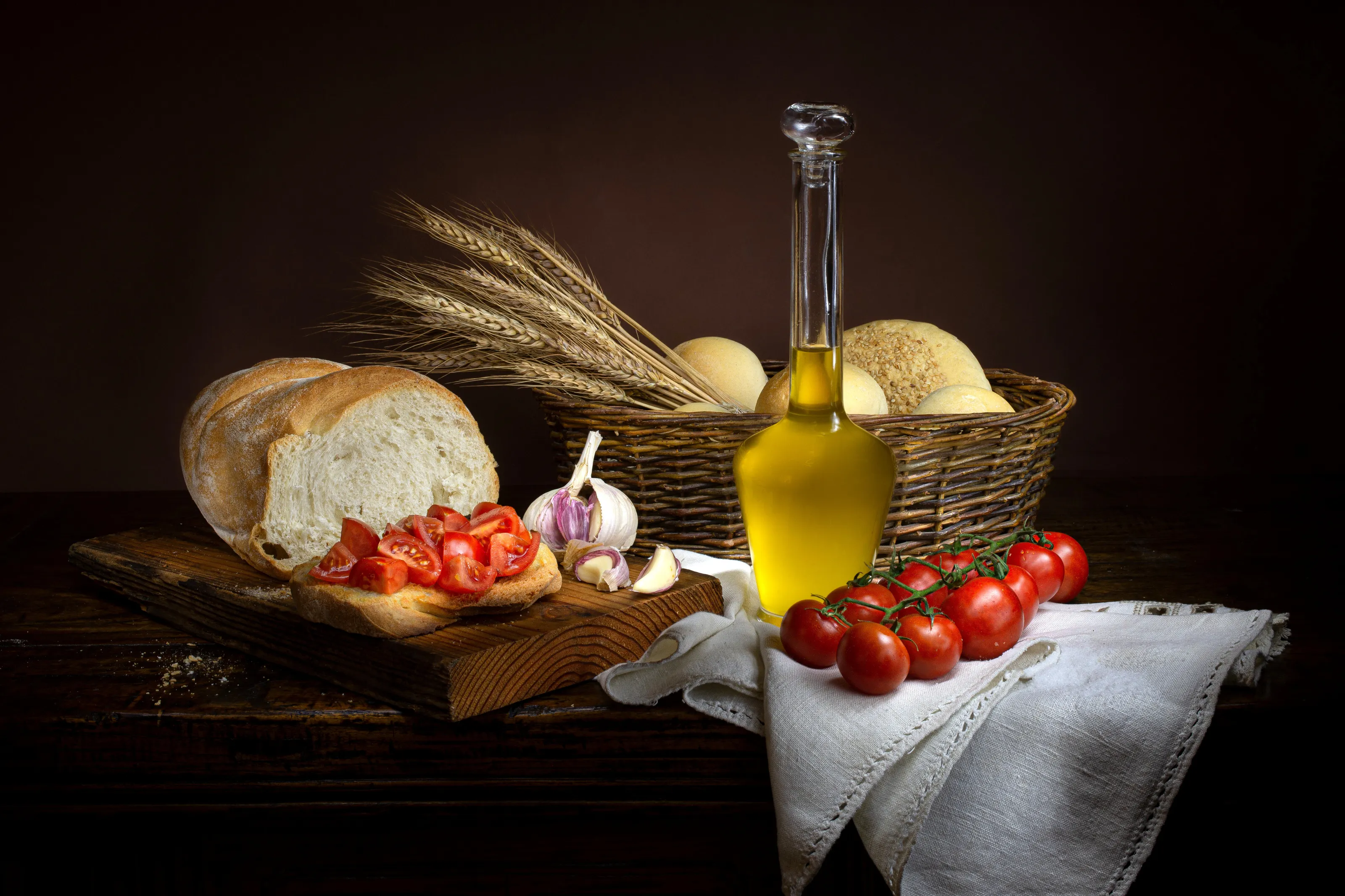

This compelling but busy scene has been cleverly tamed by using varying intensities of light to highlight the focal point and other areas of interest. The green Romanesco’s green hues complement the radishes’ purple hues, while various neutral colour tones from the wooden backdrop to the hunk of bread, help to balance the frame without detracting from the main subject. We love the use of texture, with various materials and surfaces, including the white cloth, providing additional interest.
823 Images entered
392 Photographers


Filling the frame with a plate of food is a great way to focus the viewer’s attention on the dish itself. We like how the plate has been perfectly centred within the frame and how the narrow aperture has allowed for a generous area of sharpness. Even lighting has also been used to prevent harsh shadows and the dark background at the top corners of the frame doesn't detract from the subject matter.


The classic style of this image pairs perfectly with the traditional silverware. Viewer’s are immediately drawn to the sharpest and brightest portion of the image, the brie. But beyond the focal point is a clever composition. The mixture of reds and greens complement each other, while items such as the green cloth add a variety of textures.


If you haven’t already guessed, this beautiful abstract is in fact a top-down shot of an egg in an egg cup. Capturing the subject perfectly square was vital and we like how the lighting has been used to add a three-dimensional feel to what would have otherwise been a very flat-looking image. A fantastic, creative shot.


This action shot of a chef flipping pasta in a skillet might look like a studio image, but it was shot outside in natural light. A black cloth was placed behind the subject and a burst was captured as the chef skillfully flipped the pasta. The image where the pasta looked best was selected and then a few more pieces of penne, basil and tomato were added in post to help balance the flying food. An excellent photo!


This is a great example of documentary-style food photography, where the viewer gets a behind-the-lens look at the activity in the kitchen. The focal point is right where it needs to be – the closest pizza base – while a shallow depth of field has been used to cut down distractions, while still showing another chef working in the background.


Our taste buds are tingling thanks to the tantalizing nature of this flatlay. The marble effect was created using a sheet of wallpaper, which was a clever choice since the matt finish will have cut out any glare. We like how items of food are falling from the board, along with various crumbs, adding to the rustic nature of the charcuterie board.


This is a lovely example of food in situ. The blurred background helps to isolate the table, but you can still make out a bustling restaurant in the background, which makes it all the more inviting. The poured glass of wine, chair and other plate also creates a lived-in feel, as if the viewer is about to sit down and dine.


This image is part photograph and part digital manipulation. The result is a surrealist work of art. Solid, bold colours and crisp edges combine to create an extremely stylized but utterly compelling image. It’s a far cry from conventional food photography and is a fantastic example of blurring the lines between photography and art.


Meet the expert judge

Brief
See more contest details
In this Nikon-only contest – brought to you by N-Photo magazine – we're asking for your best food and drink images. So, whether it’s a tantalizing flatlay, a candid cooking prep shot or a tasty-looking close-up, we’d like to see your best food and drink photographs. </br> <b>Entry details:</b> <b>Do:</b> Ensure your photo was taken on a Nikon camera (any photo not taken on a Nikon camera will be disqualified from the competition) <b>Do not:</b> Have a watermark on your photograph <b>And to give yourself the best chance of being chosen:</b> Have EXIF data in your photo (in the info section) Provide a title for your photo Write a description of the photo you're entering of at least 50 words to give us the background of what the image is of and how it was taken. A little context can go a long way! Check your photo has a resolution of at least 3000 pixels on the longest edge of the photo as we will be printing our top 10 images in N-Photo magazine.