

I really like the fact that although this image appears so still and stationary, there is so much ‘going on’. It can be read several ways: the figure could be contemplating his future, his hometown, and place of his birth and childhood. Walking along the road that leads to this vantage point for one last look at all that has been familiar before heading out into the unknown. It could also represent a homecoming, finally, after a long journey, almost reaching the security of home. Either way it’s a great image, very well balanced both visually and conceptually. Nothing is there that dilutes or adds to the meaning. The town is compact, small, quite industrial and in many ways quite anachronistic. This is helped, too, by the monochrome colour palette, and contained within the landscape and compositional elements of the frame. The line of the clouds feel as if they are ‘pulling’ the figure back towards his home town. I would have quite liked to have seen a colour version. Black and white is a step removed from ‘reality’ in contemporary photography, although quite the opposite in the tradition of twentieth century modernist photojournalism.


This image is an interesting response to a domestic, ‘home’ space. It shows the ease and familiarity the individual has with their surroundings, and the fact that behaviour in the ‘home’ environment is so different from that of the outside. I also that it has been taken by someone other than the inhabitant, almost like a form of forensic evidence! It might have been improved by tilting the camera away from the horizontal slightly, to give an added sense of unease and tension. Also I would have liked to have seen the shot as a ‘plan view’ shot downwards from the ceiling with a wide angle lens.


There is no question that both parties here are comfortable and familiar with and perfectly relaxed in each other’s presence. Compositionally the image is strong, with both the wall textures and the seating giving a distinctly nest-like quality to the location. The woman’s arms look as though they are protecting and cradling the cat. The computer suggests that she is communicating with the outside world from within the safety and comfort of her ‘home’.

I think the crop is too imprecise - it could be portrait or more central in a landscape format - but really a lovely, graphic, simple and effective image. From the arrangement and colour of the light trails it’s obviously a domestic Christmas tree (even if actually this might not be the case), and I really like the odd, green blurry glow at the top, suggesting a glowing star. A home should also be a place where you are free to develop and experiment and this is evident in the technique the photographer has attempted here.


The key to being successful in this competition is responding with an image relevant to the brief. ‘Home’ is both a physical and psychological space, offering protection and safety from hostile elements. It is also a place where you can grow, be nurtured and be free to express yourself. It is familiar and is somewhere where you can feel truly at ease. This image works so well, because the house in the image is such a strong visual signifier of refuge and safety. It is almost being swamped by the advancing winter landscape, but nestled firmly in the valley it gives such a strong feeling of security. From a compositional point of view, its position within the frame really works because you can feel the tension between the house, the field and the trees fighting to ‘control’ the frame.


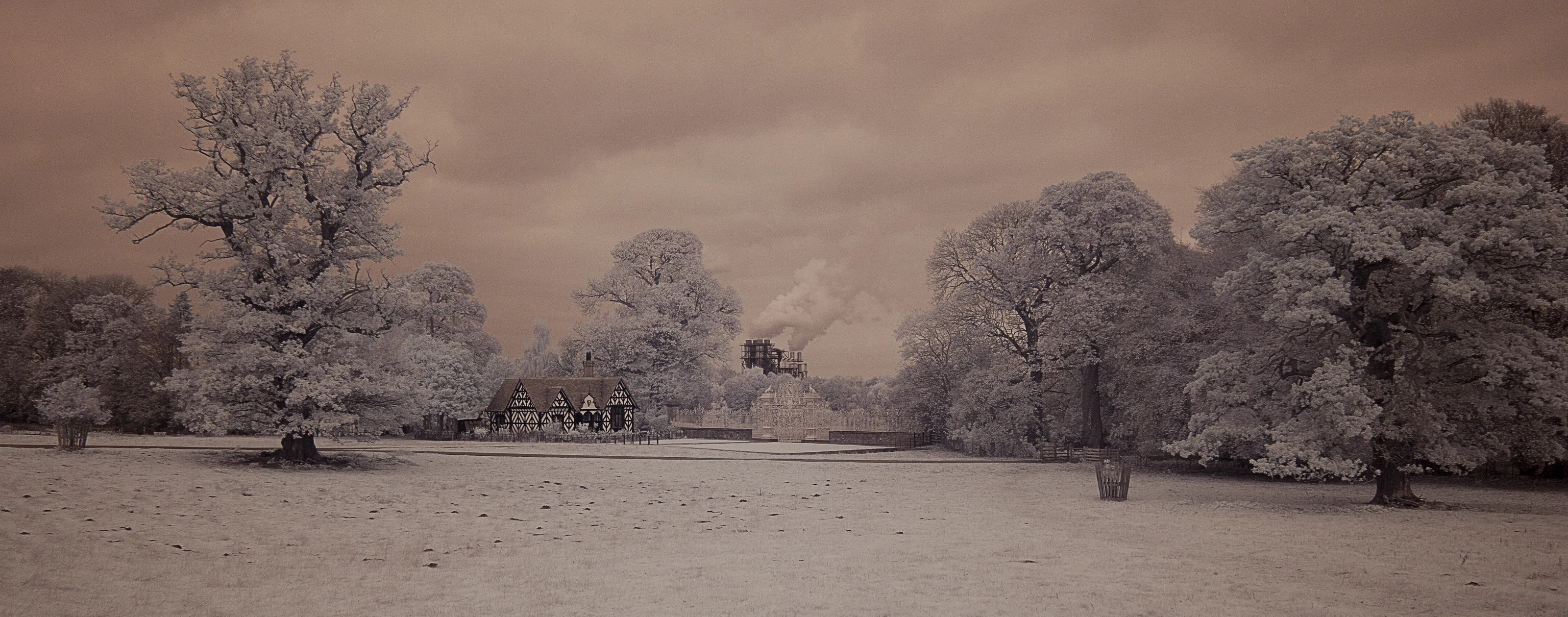
The infra-red treatment works particularly well with the trees, as it really harmonises all the structural elements in the image: house, trees and chemical works in the background. The amazingly ornate gates suggest that the whole area they enclose and protect is unambiguously the ‘home’, and their function is emphasised by the chemical works belching out smoke in the background. It is this surprising, unexpected element that really holds the key to the effectiveness of the shot, and, of course, brings in many contemporary environmental debates. The panoramic composition, too, emphasises that this is the ‘hostility’ from which the ‘home’ is protecting us.


It is very unusual to assess a single image rather than a series, or larger body of work and in this case I would really like to see more. The lighting here is exceptional although unforced, and very natural. It is compositionally strong and the cat’s intense act of ‘looking’ makes the viewer increasingly aware of the interior/exterior, safe/hostile boundary that ‘Home’ creates. I like the way the inside looks more sinister than the winter sun and the inviting chair of the garden and this again subconsciously causes us to re-evaluate the psychological nature of the ‘Home’. I think from a compositional point of view the white plastic basket on the left and the cropped director’s chair show refreshing creative freedom.

I really like the unforced, relaxed simplicity to this shot which seems to emphasise exactly the familiarity and comfort of the home environment. The light is soft and comforting. The colours, too, appear in harmony. It does seem a bit strange, however, for the figure (and photographer, I guess) to be wearing outdoor shoes. I don’t mind this - it gives the image a sense of ambiguity - but socks or bare feet would have made the figure appear more relaxed.


This is a simple and effective idea. There is visual distinction between the inside and outside, and the protection from hostile elements that home affords us. Have a look at the work of Naoya Hatakeyama, who has produced some very effective work quite similar to this. I think it could be improved by shifting the composition downwards, as I find the tones of the lower third of the image really interesting and would like to be able to see more. You could try shooting at an angle to the glass, incorporating a shallow depth of field to the foreground - I think it could add a sense of intimacy to the interior space, emphasising its homeliness.

There is certainly a strong sense with this image that it is a contemporary representation of a home. Simple, box-like and urban, and very similar to all the other simple, box-like homes being built out of the window. As an interior it feels quiet and happily messy. I also like the slightly incongruous ceiling light as a defiant attempt to personalise the space. I really like the visual distinction between the bright, almost aspirational, property boom going on outside, and the mundane, ordinariness of the reality of domestic living inside the building itself.
65 Photographers

I really like the narrative feel here. It is a break in a long journey, the overnight camp and a temporary home. The photographer is obviously the inhabitant of the tent and the act of photographing it emphasises the personal importance it has as ‘home’, refuge and shelter. The ‘rule of thirds’ composition helps preserve the stillness and tranquillity of the scene, helped too by the bike pointing ‘inwards’ towards the door of the tent in reassuring balance. This all helps to visually reassure us that home, however temporary, has been firmly established. I like the fact that it is compositionally quite minimalist - there is nothing in the frame that has not been purposefully included. Although I think I would have liked to have seen more indication that the image was shot in the evening as opposed to morning.
17,623 Ratings


119 Images entered


I really like this shot, despite the fact that technically it’s let down by camera shake and a rather distracting bright blue box in the background. It strongly suggests the psychological, emotional space that ‘home’ represents - an environment where you are free to ‘be yourself’. Both figures seem unashamedly comfortable and perfectly at ease with themselves, each other and their surroundings. They do not appear in the least bit threatened or even aware of the photographer. There were three fairly similar shots submitted and this is certainly the strongest. The focus should be with the figure holding the hair, as she is the strongest subject in the frame and this is emphasised by the quite brutal cropping of the foreground figure.
Brief
See more contest details
What defines 'home'? The answer to that question shifts as life changes. Is it a building, or a city or country you've left behind, or the landscape or environment you feel most comfortable in? Show us what 'home' means to you.
Meet the expert judge


I like the fact this is obviously a domestic environment, and also that the figure has her back to the camera - we know neither her expression or have any clue to what she might be thinking. Although on further reading I might get a sense of loss and bereavement at Christmas – one figure, yet two snowmen on the window. Ambiguity is very important with staged narrative images like this. (Have a look at the work of Hannah Starkey, for example.) But it feels too cluttered, I’m afraid, as if the only staged element was the direction of the figure


