
Symmetry can be a photographic superpower as this image demonstrates. Look and enjoy the symmetrical relationship of these stilts, the birds in that beautiful mirrored pose, their bodies overlapping and seemingly connected at the ideal point. It is as if they are one, but both still obviously individuals. Then we have the reflection which adds another symmetrical dimension to the frame, the photographer placing the mirror line in the centre of the image. This creates a feeling of tranquility, a perfect mood for the scene. I understand the vertical choice for the crop here, but I think this may work even better if cropped with a horizontal bias. Cracking image.

Mallards make great photographic subjects as they are common and confiding. The males have such a range and depth to their plumage too, with an iridescence on their heads that changes colours depending on the angle of light. Many overlook these birds because they are common, but there are always interesting ways to photograph them. This image may not be unusual, but it is a nicely executed shot showing lots of technical skill. I like the way the subject has been placed to the right of the frame, the head pointing to the left and into the space on that side of the shot. Exposure value, focal point, low angle of view, soft background are all jobs well done, but it is the position of the left foot that adds extra interest and elevates the image. Common subjects should never be overlooked, they provide so many opportunities to create interesting images.
Meet the expert judge


There are some really nice technical elements to this image. I really like the eye-level point of view. This is so important as it creates intimacy and also allows separation of the subject from the background. The focus is right on the lizard’s eye and the exposure is well-balanced. A shame that the tail cuts across the left edge of the frame and the bright out-of-focus twig in the background is distracting. I would be tempted to crop in tighter to reduce some of the foreground space and draw more attention to the subject.


The crow family are often overlooked as photographic subjects, and that’s a shame. Taken in the right conditions and with the correct approach, the results can be very pleasing. This photo is a good example of this. The light here is soft and diffused by high cloud which has allowed the detail in this bird’s plumage to stand out, just look at all those tones and beautiful textures. The low angle of view is essential to create separation between the bird and the out-of-focus background. I like the bold placement of the bird in the bottom right portion giving it plenty of space to look in to on the left. The grass is a little bright and distracting and I would have toned this down a little in post production.

The overall composition of this photograph is nicely balanced with a strong diagonal running from top left to bottom right. The exposure and point of focus are well judged, and the depth of field has ensured that plenty of detail in the tiger’s face has been captured for the viewer to enjoy. The wistful stare into the distance adds an intriguing melancholic feel. There are some unsightly reflections from the glass on the edges of the image and I would have cropped in tighter to remove these. This would also help to remove the obvious signs of the captive environment.

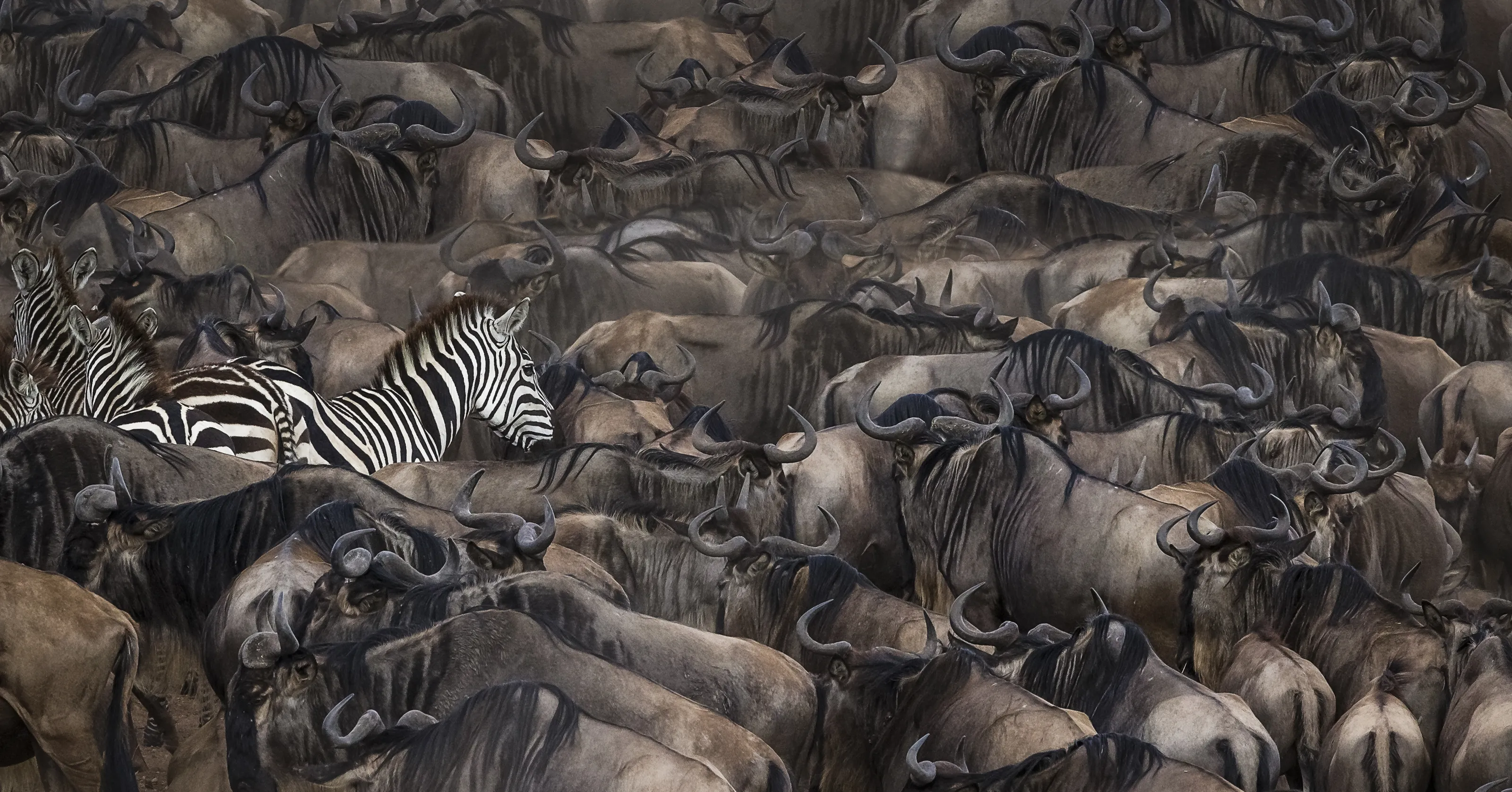
This would have been an amazing sight to have witnessed and the photographer has had a unique opportunity to capture this photograph so we can share their experience. I rather like the slight under exposure - this has created a moody atmosphere and helped to diminish the distraction of the background elements. The animals are much brighter by comparison, and this draws immediate attention to them. Whilst many of the technical elements are well executed, the crop doesn’t work well for me, although there seems to be a tree coming into the right side of the frame which may have directed the composition in this way.


The more I look at this image, the more it grows on me. What makes it work for me is the strong framing anchors of the dark trunk and branches of the tree that enclose the top and left edges of the frame. These provide a dark area from which the leopard is seemingly emerging into the bright light streaming through the background foliage behind the animal. The shape and position of the cat in the frame is really pleasing, the body forms a curving line along which your eye follows, it’s stare in compliment, ensuring your eyes complete the journey through the frame and into the bottom right corner. Getting the exposure correct in this situation would have been tricky, many would have taken the camera’s metering and this would have lead to an under exposed shot. Watch the shutter speed settings - 1/200 second in this situation would have often lead to a soft shot - luckily not the case in this instance. Don’t be afraid to up the ISO to enable a fast shutter.


This is one of those photographs that is immediately comfortable to look at as it displays so much technical skill in its execution. With tight portraits such as this, composition tends to be more straightforward as there are fewer elements in the scene to balance, but the pose and shape of this bear in the frame is near-perfect. Take note of the photographer’s low angle - essential for creating connection with the animal and isolating it from the background through shallow depth of field. The lighting is even and soft which has allowed so much detail to be captured in the fur. The long lens and open aperture have allowed separation of the background, whilst still retaining those complimentary textures and tones.


This image is a classic waterhole shot of elephants, but a really nicely taken example. The conversion to black and white is a good choice - elephants have such a strong shape and the textured skin really stands out when the colour is taken away. It also deals with the frailties of harsh light that the middle of the day delivers. I also really like the low angle of view which provides an element of intimacy to the frame. The group of three animals cutting across the left edge of the frame is uncomfortable. I would have cropped the image tighter, eliminating these animals and concentrating on the main group - this would strengthen the composition.


There are a number of things the photographer has accomplished well with this image. The lighting here is verging on the harsh side, but the way the frame has been exposed has allowed detail to be captured across the tonal range and the image to render pleasingly crisp and sharp. Just look at all the detail that can be enjoyed in the plumage and facial features. The focal point is right on the eye, so important with tight portraits such as this. The background is rather distracting with those vertical lines and bright highlights. I would be tempted to crop in really tight to minimise those areas and to reposition the eye off-centre - there is certainly enough detail in the bird to make this work.
96 Photographers
9,336 Ratings

For me, this image is all about spotting an opportunity and choosing the composition that gets the most from it. Firstly, I really like the pose of these monkeys and the parental relationship. The connection between the two animals is strong, the shapes strong with those interconnecting limbs and the suckling youngster. The direct eye contact is essential for creating immediate connection with the viewer. Their position on the corner of the high building wall presents them in an almost statuesque way, as if they were designed by the architect and meant to be there. I also really like the line of the wall anchoring the right side and the perpendicular line of the balustrade leading the ye to our subjects. Watch out for distracting dust spots in areas such as blue skies - look closely and you will see one to the area upper right of the adult’s head. Cloning these out is quick and easy in post production.

Foxes make undeniably appealing photographic subjects as this image shows. I like the position of the fox in the frame here, placed off-centre to the left giving it the space to look into on the right. This balances the image well. Focus is firmly on the animal and the background and foreground elements act as support and do not distract. I also really like the concentrated pose. The fox is a little under exposed, the camera’s light meter has likely prioritised the sky as its source of level. Some post production work to regain shadow detail would rebalance this and improve what is already an accomplished image.


We see a lot of goofy close up pet portraits in these contests - the cameras on our phones make getting these images instantly accessible. But most aren’t very well thought out as a result. Not the case here. The composition of this image is striking. I love the concentration on the dog’s nose being right in the viewer’s face. The close proximity of the lens to the nose has created a shallow depth of field for the reminder of the frame, the face falling off softly from that nose which dominates. The eyes have been placed in the perfect spot to balance the frame - take note of how they sit at the intersection of thirds. But what makes the image for me is the way the blanket frames the snout and creates the perfect anchor for the right and left sides of the image. It acts as a funnel to concentrate the viewer’s attention right where it needs to go. This dog’s personality really shines through this image, the sign of a successful shot.
100 Images entered
Brief
See more contest details
Welcome to Photocrowd’s ‘Animals’ contest for New Joiners! These contests are a chance for new members to introduce their photography to the community, and get a taste of how Photocrowd contests work. They can be entered by anyone within their first 28 days of joining Photocrowd. After 100 images have been submitted the contest closes and the Crowd will start rating the images. The Expert Judge will also be judging the images and writing reviews at the same time. All the winners, both Crowd and Expert, will be announced after 3 days of judging. Make sure you also check out our two other New Joiners contests - ‘People’ and ‘Landscapes’.


This image is all about that dramatic light and how the photographer has used it to their advantage. Shooting into the light like this has rendered the horses as almost complete silhouettes, but it has allowed the light to sculpt their shapes and highlight their outlines with gorgeous rim lighting. The dust that the herd is kicking up has caught the shafts of light coming through the animals beautifully. The hills in the background add interest and give the animals a sense of place, breaking the horizon and adding depth to the frame. The warm tones of the image are simply divine. I really like the cinematic crop chosen here too, however, I would have cropped tighter to the group as I find the water on the right side of the frame a little distracting as it breaks the strong dark anchor of the shadows to the bottom of the frame.


I particularly enjoy images that make use of exposure techniques such as low key, as we see here. The photographer has deliberately under exposed the image to emphasis certain features of this dog, using light to draw the viewer’s attention where they want it to go. The overall tight composition is pleasing and well balanced, however, the focus has locked onto the dog’s nose as opposed to the eye which is a little soft. The image shows a good understanding of light, exposure and composition. Nice job.


