

The armour-like plates of this ladybird are emphasised by the angle and diffused light here. In a shot like this it can be tempting to try and get everything pin sharp, but in this instance it would have detracted from the wonderful texture of the head, pronotum and antennae. It’s a great shot. Congratulations!

2,376 Images entered

766 Photographers

70,519 Ratings


Photographing amphibians is tricky enough but doing so while also providing a sense of their natural environment is even tougher! Here the sweep of green moss is echoed beautifully by the curves of the cuillins in the background and the grey wash of water in the mid-ground provides a sense of the watery world this frog lives in.


I love the way this chalk hill blue is sitting on the carrot flower as though it’s resting on a fine mattress. Looking for butterflies before sunrise is a great idea because they tend to be more docile before they warm up, which makes them easier to photograph! If there’s a sprinkling of dew to provide extra sparkle, then so much the better!




Meet the expert judge


This picture says a lot about the lifecycle of the tiny animals featured – the leaf looks as though it might have been nibbled, the egg cases show the previous stage in the cycle and the beautiful markings on their backs give an indication as to what might predate them. Showing an element of behaviour is a great way to add extra interest to a wildlife image.


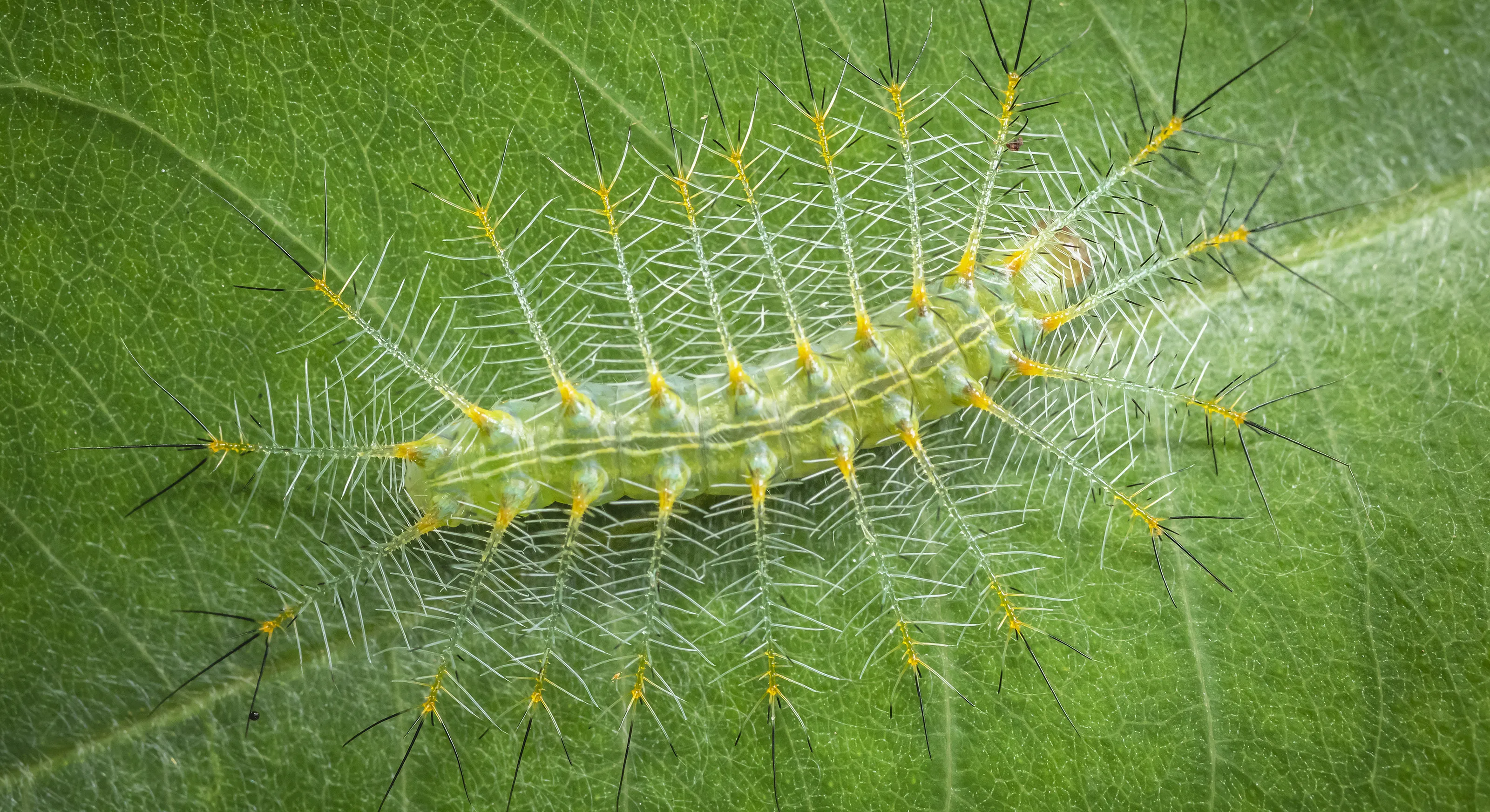
While this creature only takes up a small portion of the frame the diagonals created by the web give it extra gravitas. The colour behind the web is a great reminder that with close-up work the background is equally as important as the foreground. The ‘spikes’ on the subject also add to the graphic nature of the image.

You really get a sense of the lightness of the water striders here. The blue of the water complements the colour of the insects brilliantly and the organic shape of the reflections adds an extra dimension. Keeping both insects in focus, while they were moving, must have been challenging, but the photographer has balanced the aperture and shutter speed perfectly.


This female jumping spider is beautifully captured with sharpness exactly where it should be – on the eyes. The veins on the leaf she's standing on give a good indication as to her size (I’d say less than 2cm) and also serve as lead-in lines drawing our attention to the subject. It’s a wonderful image.


There is such a moody, almost painterly, feeling to this picture. An aperture of f/5.6 proved perfect for throwing any details in the background out of focus while retaining the beautiful details in the wings of the copper. It’s all about the light here – first noticing it and then capturing it expertly.


Adult mayflies have an extremely short lifespan so to capture one that has just emerged from its larval stage and adopted such a photogenic pose is a real gift. The curve of grass leads your eye into the frame and towards the subject where it lingers to take in all of the details. The colours work brilliantly together.

One of the joys of close-up and macro photography is that it gives you the opportunity to photograph and share things that most people will not have seen before, and this is a great example. The bee was fast asleep when the photographer approached and took a series of images of its wet hair and eyes. It’s beautifully done and shows what can be achieved when you master the art of image stacking!


Brief
See more contest details
Photographing wildlife up close brings a special joy to both the photographer and the viewer, revealing details that might elude the naked eye. It also brings into play more technical aspects such as macro lenses and extension tubes, and nowadays maybe even software solutions such as focus stacking. Wildlife is a broad term, but for the purposes of this contest we will restrict ourselves to animals, and not include plants.