

There’s a lovely sense of depth and flow to this picture: the eye travels from the top tier of the waterfall to the lower pool, gently traversing the rocky riverbed on the way. Processing has been carried out sympathetically, retaining the natural autumnal colours. What’s more, the sky has been excluded, which has prevented any distracting highlights. It’s a beautifully thought-out and executed image.

This is a well observed and nicely executed picture. The colours are great, and the editing has been carried out sensitively. While the lamppost is nice and straight, the base of the building and windows feel a little off. This may be due to the construction of the building, but when an image relies on symmetry, it does matter. It’s a great picture though.

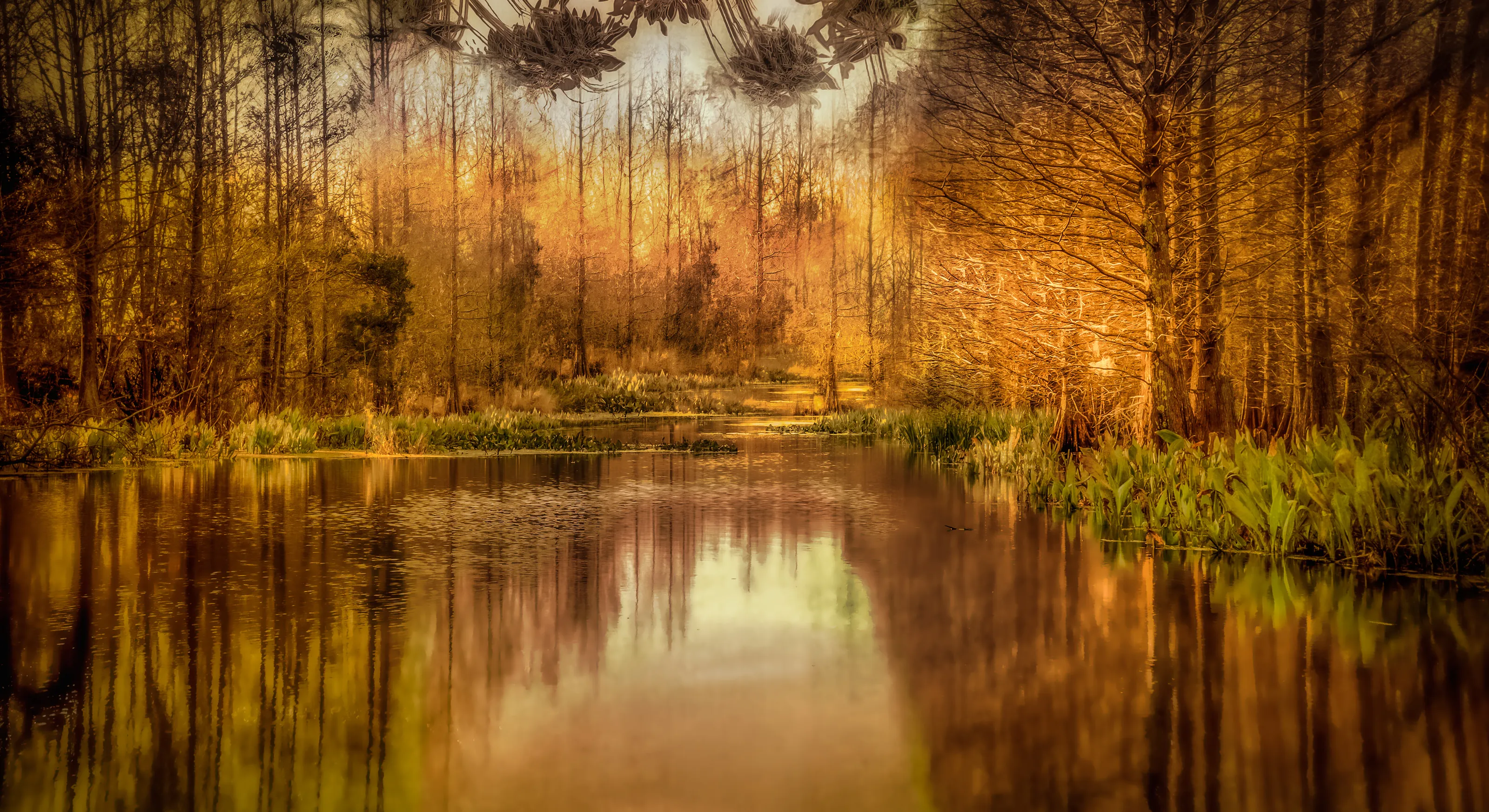
When you’re photographing trees, it can be tough to find order in the apparent chaos of limbs, leaves and trunks. Here, the photographer has balanced the composition perfectly: there is space between each trunk, nothing significant has been cut off at the edges and the central tree is paler than the others, making it the star of the show. The panoramic crop is perfect.


The shock of red against black works well here, and the way the drops of water magnify the venation in the leaf is great. Unfortunately, shooting the scene with a mobile phone has led to some technical issues. The photographer clearly has a good eye for a picture, so hopefully returning with a camera next time will yield excellent results!


Lake Bled, with its picturesque island and church, is one of the most photographed locations in Slovenia. The photographer has risen early to capture this dramatic sunrise, and the effort has been rewarded. The foreground trees are lit beautifully, revealing their detail and colour and the sky is full of colour. Interest is maintained across the frame, which is harder to achieve than you might think!


We often associate autumn with vibrant colours such as red, yellow and orange, so it’s great to see a monochrome picture celebrating so many tones, tints and shades of brown. There’s an obvious comedy aspect here, but as the photographer points out, gathering bracken like this is an important behaviour for red deer during the rutting season. Using a focal length of 500mm has allowed the photographer to keep a respectful distance, while helping to throw the background out of focus. It’s a wonderful photograph.


Brief
See more contest details
Have you ever wondered why leaves turn yellow, orange and brown in the autumn? Here’s an explainer from the brains over at Kew Gardens in London. https://www.kew.org/read-and-watch/why-do-leaves-change-colour So as we say goodbye to the chlorophyll, and hello to the flavonols, carotenoids and anthocyanins, it’s as good a reason as you’ll find each year to pull on a hat, buy yourself some fingerless gloves, and get out shooting in the natural world.
4,988 Images entered
1,669 Photographers
Meet the expert judge


Making the fallen leaves the star of the show works well here. The crop at the top is good, including the fork in the trunk while also excluding quite a lot of the white sky which might have been distracting. Unfortunately, the character in the blue jacket (and the fence around the sapling in the background) draw the eye too much. A few steps to the left might have solved both problems.

Pointing your lens up at a tree canopy can be very effective, as illustrated here. Using a wide-angle lens has caused the trunks to lean into the centre and allowed plenty of the branches to be included. The tree with the green crown is well placed too. My only gripe is with the exposure – it feels a touch too bright in places. A little more tweaking in post and this could be a high scorer!

The composition here is an arrangement of four triangles: the sky, the woodland, the river and the rocks, which makes it extremely pleasing to look at. Using an aperture of f/16 has allowed plenty of detail to be recorded in both the foreground stones and the distant trees. The exposure has also been managed well.

There’s a generous amount of ‘negative’ space in this image, and it works perfectly. It feels as though the robin is singing across the frame. The colours in the background complement the subject well and there is enough shape in the leaves for us to recognise them. The focus is exactly where it should be, on the head and eye. It’s a beauty.


Shooting backlit foliage is a great idea because it shows all the venation, while also hiding any distracting details in the background. The composition is nice here, with plenty of space around the leaves, and the colour is also good. Unfortunately, the subject is not quite sharp enough. In instances like this, where the subject might be moving, it can help to use a clamp to hold things steady. Failing that, a faster shutter speed will help.


Trees can make a great subject for Intentional Camera Movement (ICM). The colours here are great, and a shutter speed of 1/2sec has produced just the right amount of blur. Where the picture doesn’t quite work is on the righthand side where what looks like a telegraph pole has been included. Making a tight crop of a section on the right might solve this.


