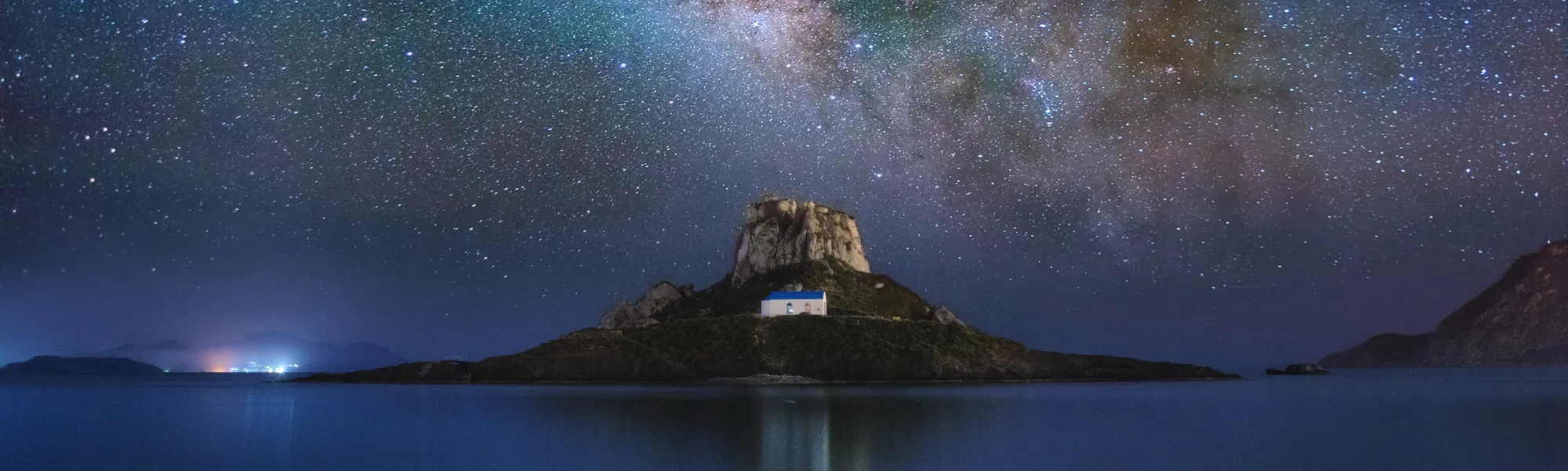

This is just marvellous. In some ways northern lights photography is comparatively straight forward: accept the possibility you might not see them, book tickets anyway, then point your camera at the sky if you see them. This picture demonstrates the complexity of the job, though – make no mistake about it, a shot like this won’t work if your camera is in full auto mode. This is so nicely composed and captured and makes me truly wistful for the return of the lights this season. Roll on winter 2021.


God, judging this competition was impossible. Impossible. But by the time I realised how good the final crop of images was going to be, the commitment had been made and it seemed churlish to back out. Much umming and ahhing later, and this blinder of an image is the top of the pile, but frankly the order of my top 10 images has changed so much the top spot could have deservingly gone to any of about 20 other possibilities. But here are the things I like about it: the balance of foreground and background is spot on, and the focussing job isn’t too shabby either. The processing has been done with an artist’s touch, and even the light pollution on the horizon has been deftly incorporated into the image. Spot on.


Brief
See more contest details
Photography has the unique ability to showcase the night sky, and its celestial bodies, in a way that the naked eye just can’t manage. We need reminding regularly of our place in the Universe, and what better way than through the magic of nighttime photography. *This contest is open to Photocrowd subscribers (Challenger/Pro/Master), or by purchasing entries.*


What a magnificent experience this aurora must have been. Nothing beats the sound of a snowy wilderness at night – the snow muffles noise, making the northern lights a sensory experience that’s about much more than just the visual. Every aurora is a learning experience as well – here, I would have double-checked my focus on the trees in the foreground, getting them as sharp as possible to give my audience’s eyes something to hook onto immediately.


Shoot this photograph straight into my veins. Or at least get it printed on some nice paper, pop it in a good frame hang it somewhere prominent, because I love it.There are strong Stranger Things vibes here, thanks to that haunting red glow behind the trees, but the rest of the image hangs together just so well. I love the spooky water – with its faint reflection – on the left of the image, the perfectly focussed stars above, the way the colours complement each other. The perfect nightime image.


Meet the expert judge


670 Images entered


Good Milky Way photography requires top-notch planning – but you still need to go out and shoot the damn thing, so it’s satisfying to see such a well planned and executed image. This hangs together really nicely, and I like the ghostly illumination of Doldabarn Castle, which picks out a few details that would otherwise be lost to the shadows. I’m a touch less convinced by the torch beam blasting into the night sky – if you could see the person producing the light it might give a little context, but this is still a beautifully-made frame.


It’s so tempting to think that the only good star trail shots are those where the stars make a full 360-degree revolution, so it’s marvellous to see an image that tears up the rulebook and still produces one of my favourite results in this competition. The barn has the chef’s kiss amount of light on it – it’s spooky without being murky, it’s foreboding without losing loads of its detail in the shadows. The star trails behind are nicely done and look like they’re falling – this looks like a piece of concept art from Interstellar – and I love everything about it.
270 Photographers


18,524 Ratings


This is such a great idea for an image, and so much has been done right. I like the illuminated tent, I like the trees on the horizon in the background, and the idea of adding a figure or two to a starry skies image is tried and tested for a reason, which is that it adds context and interest to images that often lack the human touch. It’s a good lesson, too – your average head torch produces way too much light for you to be able to work it into a shot that includes the Milky Way, so here I’d have been tempted to run the light either with a filter in front of it to take some of the brightness out of it, or to shoot two exposures and blend them together to avoid the light source being such a distraction.


