Get notified of their new contests


A very clever wide-angle view of London’s world famous Royal Albert Hall. The venue, built in 1871, is usually photographed full-frontal, showing the whole of the iconic dome-shaped building. I very much like your unique viewpoint of the South Kensington auditorium. The way you’ve cleverly aligned Queen Victoria’s, Prince Albert Memorial, reflected in the centre of the Hall’s huge glass entrance, is an artistic touch worthy of graduates from the Royal College of Art next door.


What a peculiar looking modern theatre building. It’s ironic that whilst we’re trying to straighten Italy’s leaning tower of Pisa, at the same time, Chinese architects are deliberately designing leaning structures. I’ve an absurd image in my head of the interior following the angle of the exterior, with theatregoers having to lean sideways, to watch leaning performers on a leaning stage. I love the exaggerated slant of your wide-angle photo, and placed it in my top ten the moment I saw it.


I like that you’ve chosen to zoom in on the rainbow-shaped Electric Cinema arch in London’s Portobello Road. It’s one of the oldest cinemas in Britain, working since 1910, getting its name from being the first such venue to use electric lights. Your minimalist close-up works well, but what I especially like, is that you’ve included the top of an electric lamp post in front of the building, drawing a visual comparison with the cinema’s name..

This Art Deco theatre nestled within New York’s Rockefeller Centre is proudly nicknamed ‘the showplace of America’. With the bright, colourful neon lights you’ve captured the exciting night life of the city that never sleeps. Judging by your choice of a high ISO, you shot your photograph hand-held, which was quite an achievement to sharply focus the flickering fluorescent lights, and freeze the people moving around the city’s sidewalk.


The Opera House in Buxton, Derbyshire; one of Britain’s leading provincial venues, drew quite a few entries to the competition. Designed by Frank Matcham in 1903, the architect who also designed the London Palladium. I like that you’ve included the two optimistically titled ‘The shows will go on’ posters, referring to the temporary closure of theatres during the recent world pandemic. Your clear view of the segregational, seating area signs, above the three entrances, harps back to a once class-divided society. A divided society that is still prevalent today - at least, as far as, the high cost of theatre ticket prices is concerned.


Your photo is a perfect example of how to compliment straight architectural lines, by enhancing them within a perfectly aligned composition. This beautiful, 1938 Art Deco Odeon cinema, now a multi-duplex renamed after the Greek goddess Athena, has rightly received a grade II protective listing, designated by English Heritage. Your simple, unfussy, portrait-shaped photo, does justice to the beauty of the clean cut, vertical lines of the Leicester venue. I applaud you for leaving the original subtle colours of the facade as they were intended without over-saturating them.


Opening in 2003 the playful looking Walt Disney Concert Hall in Los Angeles is one of the more modern theatres entered to this challenge. The stainless steel building is an ideal surface for projecting images onto. Most people go inside theatres for their entertainment but I really like how you’ve captured the silhouetted crowd being entertained from the outside. You’ve done well to take such a good, sharp photo on your iPhone - and in landscape format. I can never understand why people insist on taking upright photos on their mobiles when with a camera they automatically shoot in landscape.


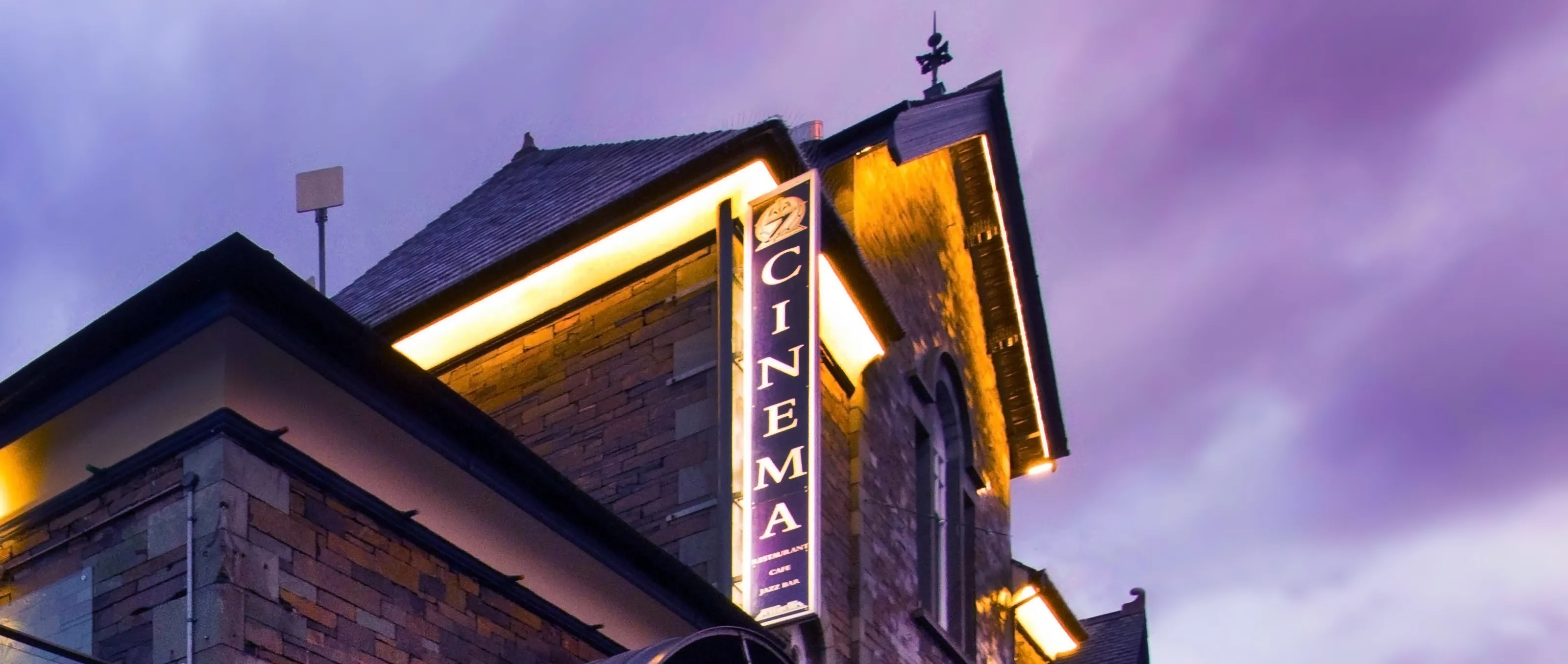
Premiered on 2nd September 1939, the same day World War II started, the Plaza cinema’s opening, ended up with an untimely closure on the same day. There is nothing untimely about your photo though, which has plenty to like about it:- the use of long exposure; the bright night colours; the moving car headlights; the tiny starbursts; the street puddle reflection; and, to cap it all, you’ve managed to underline the cinema’s name with an elongated streak of a white trail light.
Meet the judge

299 Photographers
450 Images entered


It would be a travesty if a theatre photo competition didn’t include the world famous Moulin Rouge facade. Coincidentally, the Paris home of the can-can dance, was built in 1889, the same year as that other city attraction - the Eiffel Tower. Featured in publicity posters by the painter Toulouse-Lautrec, your impressionistic photo transports us right back to the excitement of those early risqué, high-kicking, dance troupe performances. Yours was my top ten choice because it was the only Moulin Rouge entry to make use of the zebra crossing’s leading lines. The street markings, draw us across the road, towards the red revolving, neon sails and the entertainment that lies within.
28,388 Ratings
Brief
See more contest details
I want to see your photos of theatre and cinema facades. Images can show anything from the biggest concert theatres to the smallest movie houses. The architecture can be very old or very modern, from palladianism to postmodernism. Images can be in colour or monochrome and can be with people or no people. No interiors please, just the outsides of theatres and cinemas where the world goes to be entertained.


